Lead management process: 7 steps to convert more leads
Build a lead management process that works. Seven clear steps to capture, qualify, nurture and convert leads, plus how a CRM automates each one.
A lead management process is the path every enquiry follows from the moment it arrives until it becomes a customer or is closed. Without a clear process, results depend on who picks up the phone. With one, every lead gets the same fast, consistent treatment.
Here are seven steps that work for most small businesses, and how a CRM automates each one.
What a good process gives you
- Faster first contact. Every lead is contacted within the time you set.
- Consistent follow-up. No lead depends on one person remembering.
- Clear ownership. Everyone knows whose lead it is.
- Better data. Sources, stages and outcomes are recorded the same way.
- Predictable pipeline. Managers can see what will close and when.
- Learning over time. You can see which sources and steps work best.
Steps 1–3: Capture, assign and respond
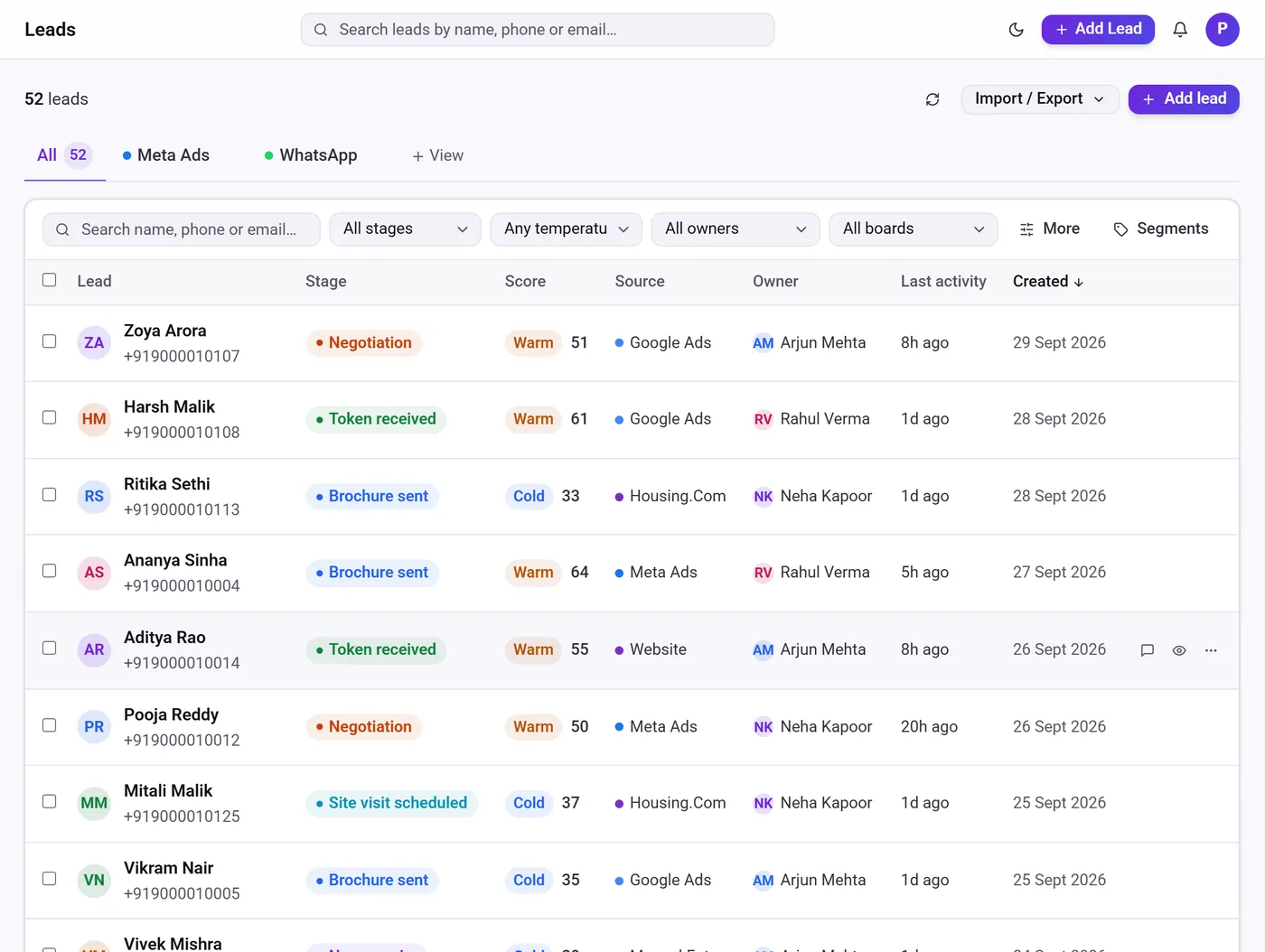
1. Capture every lead in one place. Connect your ads, website forms, portals and messaging channels to a CRM so no enquiry sits in a separate inbox. Remove duplicates so a repeat enquiry is added to the existing lead.
2. Assign an owner immediately. Use rotation or workload-based assignment so new leads never wait for someone to claim them.
3. Respond quickly. Set a target for first contact and track it. An SLA timer that flags uncontacted leads keeps the team honest.
Steps 4–5: Qualify and nurture
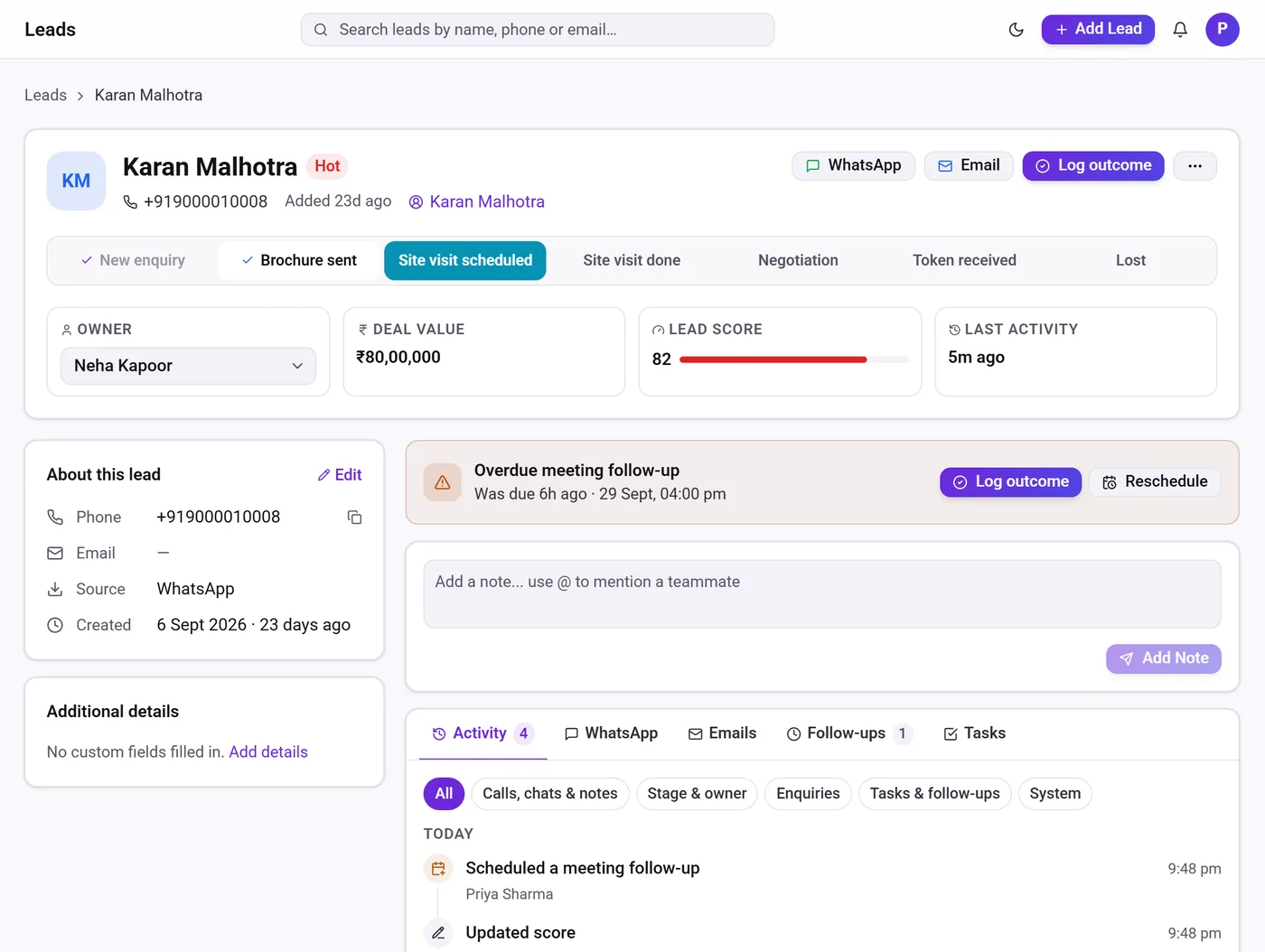
4. Qualify the lead. Ask the questions that tell you whether this is a real opportunity: need, budget, timeline and decision-maker. Record the answers on the lead and use a score or temperature (cold, warm, hot) to prioritise.
5. Nurture with scheduled follow-ups. Most leads do not buy on the first conversation. Set the next follow-up at the end of every interaction, and use automation to create tasks when a lead goes quiet.
Steps 6–7: Convert and review
6. Move deals through a clear pipeline. Define stages that match your sales process and move each lead as it progresses, with a deal value so you can see what is at stake.
7. Review and improve. Each week, look at leads by source, first-response time, conversion rate and deals stuck in a stage. Adjust your process, assignment and follow-up rules based on what you find.
- Measure first-response time
- Track conversion by source
- Find the stage where deals stall
How a CRM automates the process
- Capture and de-duplicateConnectors and forms bring leads in; duplicates are matched by phone and email.
- Assign and alertRules assign each lead and flag any that wait too long.
- Remind and nurtureFollow-ups and tasks are created automatically and surface when due.
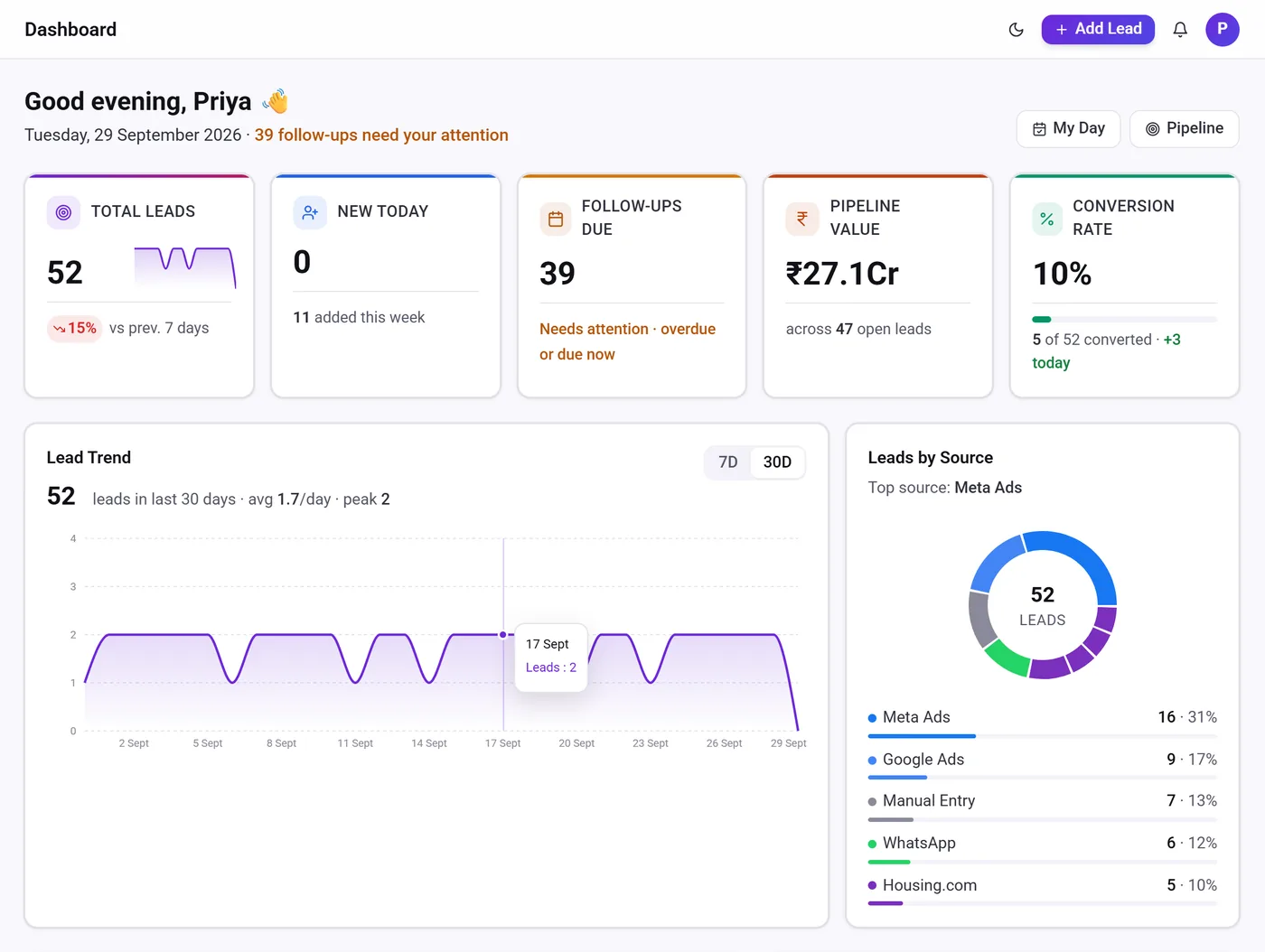
- ReportDashboards show sources, conversion and pipeline value.
Frequently asked questions
What is a lead management process?
It is the set of steps every enquiry goes through — capture, assignment, first contact, qualification, nurturing, conversion and review.
How fast should we respond to a new lead?
As fast as you realistically can. Set a clear target for your team and track it, because leads contacted quickly are more likely to convert.
What is lead scoring?
Lead scoring ranks leads by how likely they are to buy, so your team spends time on the best opportunities first.
Do I need software for lead management?
You can start on paper, but a CRM automates assignment, reminders and reporting, which is where most manual processes break down.
How often should we review the process?
Weekly for team performance and monthly for sources, stages and rules.