How to choose a CRM for small business in 2026
Choosing a CRM? Compare must-have features, pricing models and WhatsApp support with this checklist for small businesses in India.
The right CRM is the one your team will actually use every day. For a small business in India, that usually means simple setup, the lead sources you rely on, WhatsApp support and pricing that grows with your team.
Use this checklist to compare CRMs on the points that matter, and run a short trial before you decide.
Must-have features for a small business CRM
- Lead capture from your sources. Check that the CRM connects to the ads, portals and forms you use, and imports from Excel/CSV.
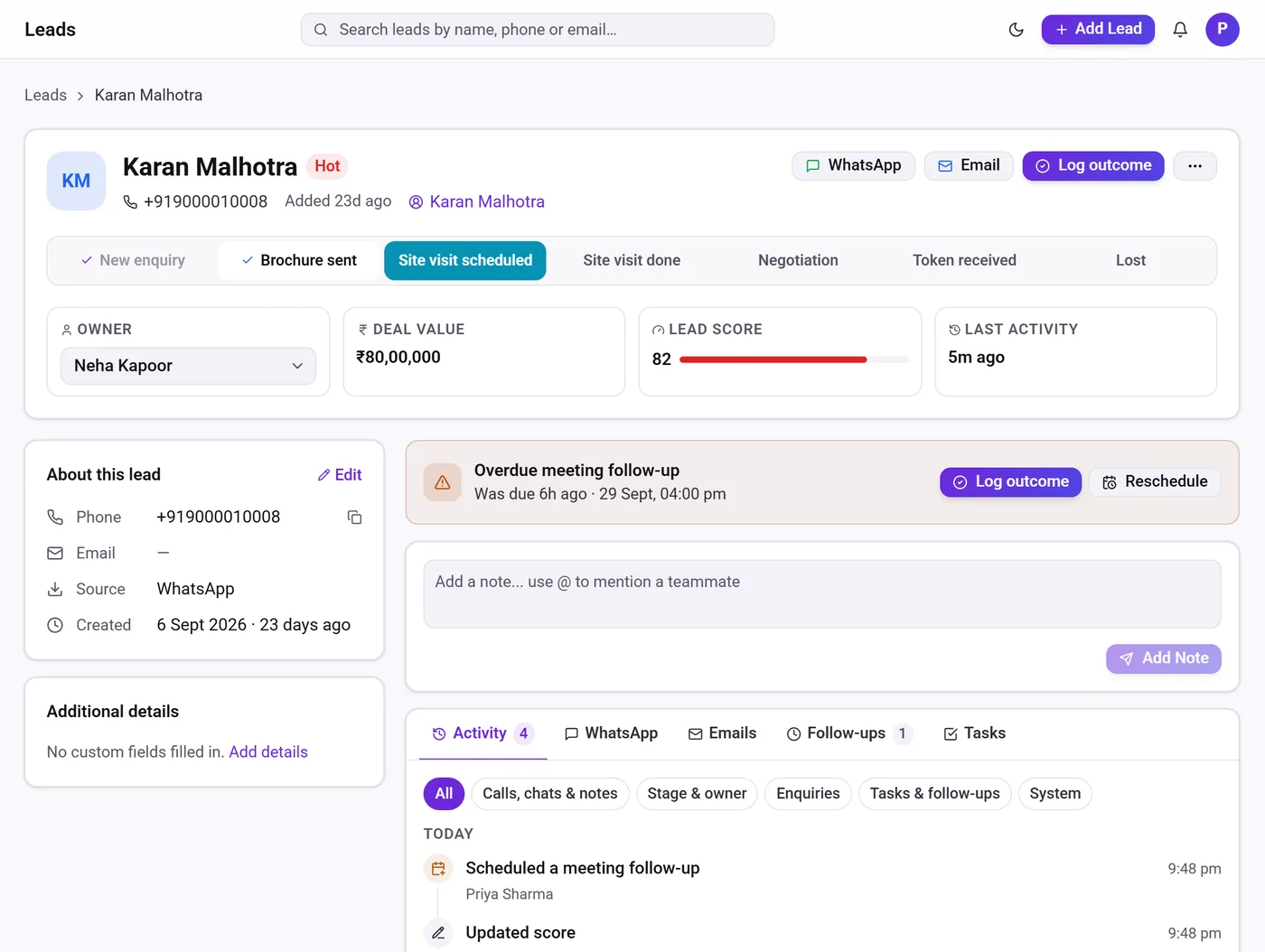
- Assignment and follow-ups. Automatic assignment, follow-up reminders and a daily to-do list for each salesperson.
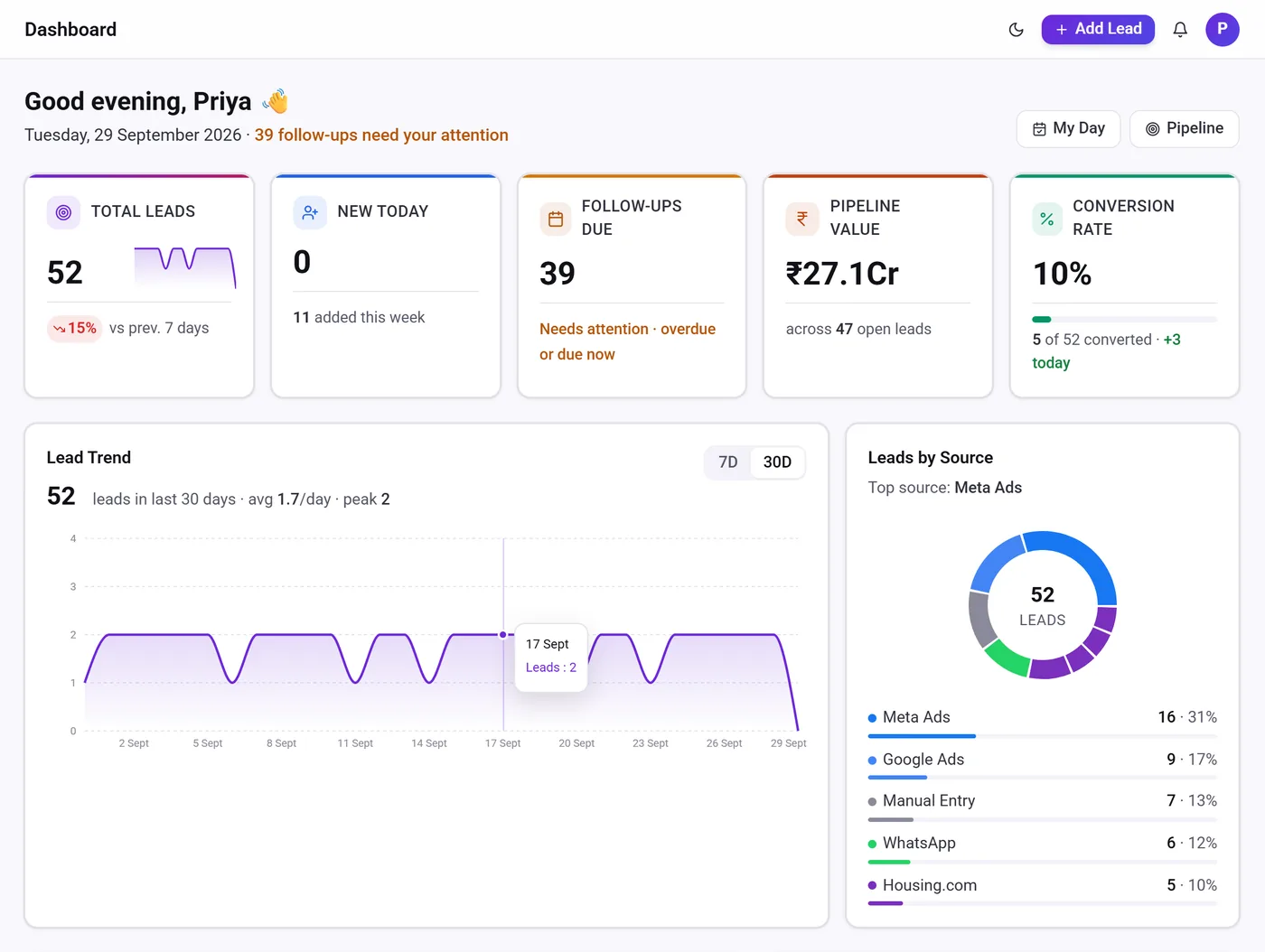
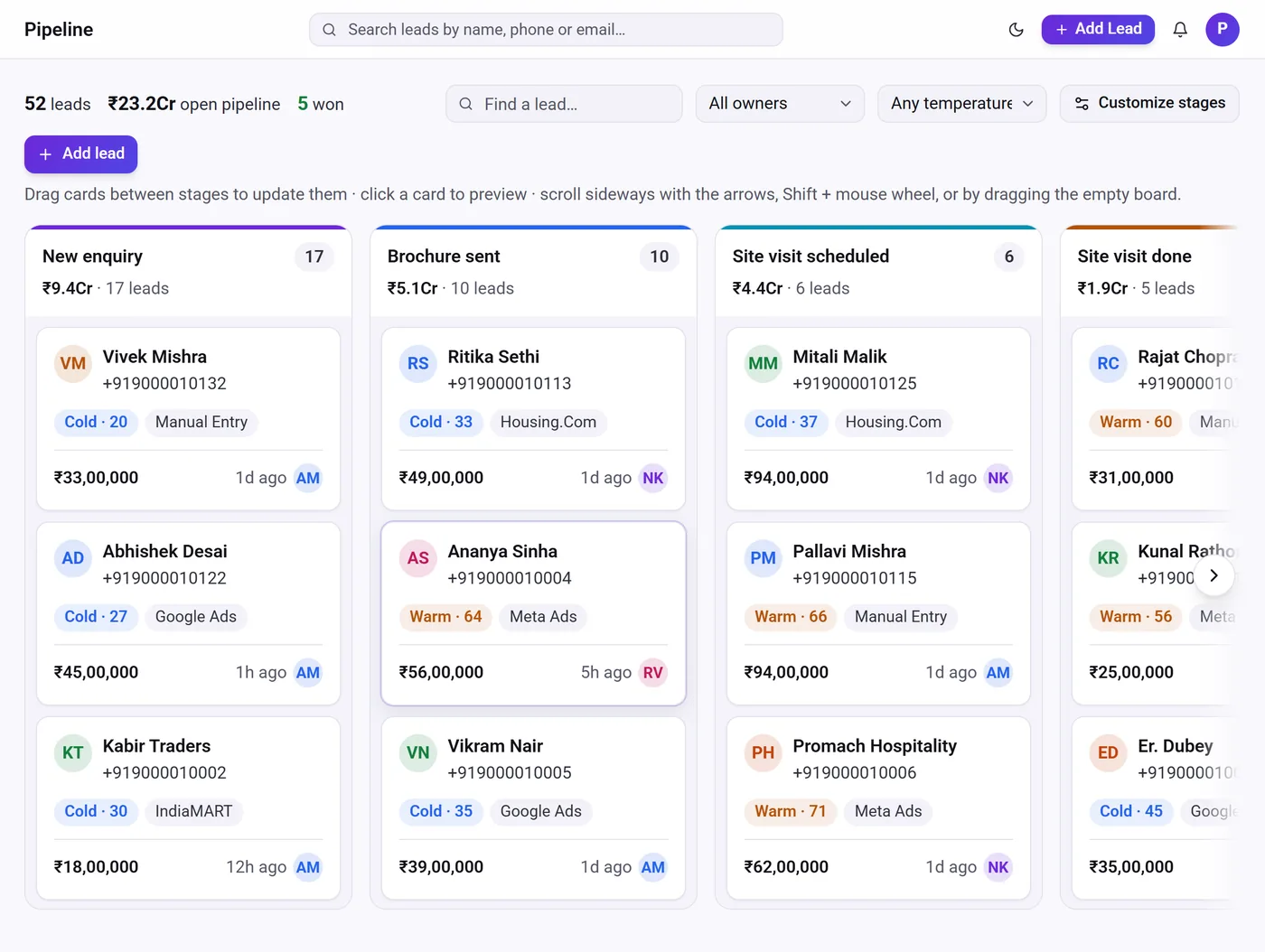
- A simple pipeline. Custom stages, deal values and an easy way to move deals.
- WhatsApp support. Ideally on the official WhatsApp Business Platform, with chats saved on the lead.
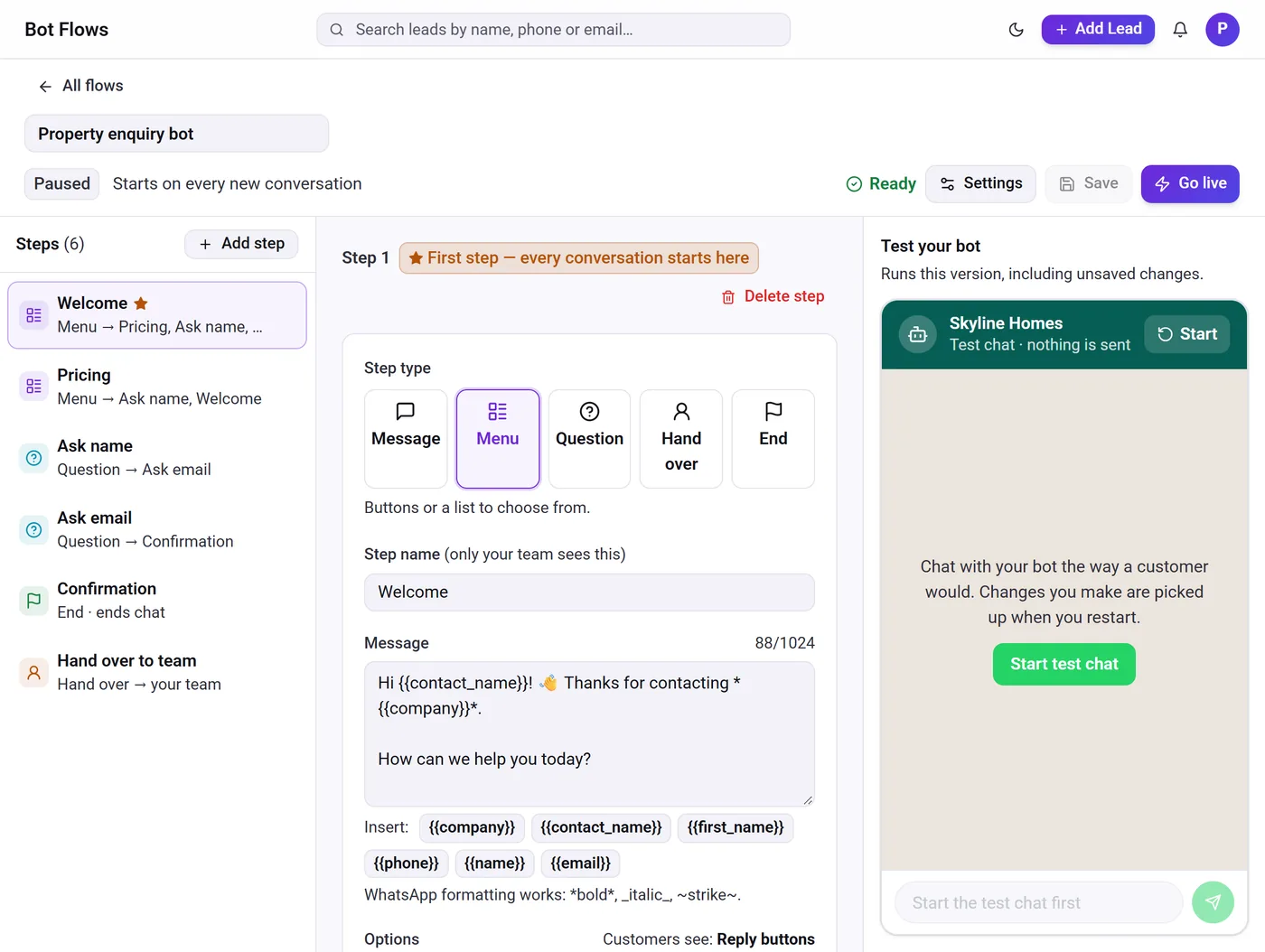
- Automation. Rules for assignment, follow-ups and alerts that you can set up without a developer.
- Roles and security. Control who sees what, with two-factor sign-in for sensitive data.
Compare pricing models, not just prices
CRMs are priced in different ways: per user, per feature tier, per contact, or as add-ons for things like WhatsApp or automation. Work out the total cost for your team today and in a year, including taxes, add-ons and any messaging charges. Check whether there is a free plan or trial, how billing works (monthly or yearly, in which currency), and whether you get proper tax invoices.
Check WhatsApp support carefully
Many CRMs offer “WhatsApp integration”, but it can mean very different things: a link that opens WhatsApp, a separate paid tool, or a built-in shared inbox on the official platform. Ask whether several people can use one number, whether chats are saved on the lead, whether bots and approved-template campaigns are included, and who bills the messaging charges.
Run a two-week trial with real leads
A demo shows what a CRM can do; a trial shows whether your team will use it. Import a sample of real leads, connect one lead source, set up your stages and ask two or three salespeople to work from it for two weeks. At the end, check first-response times, whether follow-ups were kept, and how the team feels about it.
- Import real leads, not sample data
- Connect at least one live lead source
- Measure follow-ups kept and response time
A simple selection process
- Write down your must-havesLead sources, WhatsApp needs, number of users and reports.
- Shortlist three CRMsCheck each against your list using their own documentation.
- Trial with real leadsRun a two-week trial with a few salespeople.
- Decide on total cost and adoptionChoose the CRM your team used most, at a cost that works as you grow.
Frequently asked questions
What is the most important CRM feature for a small business?
Reliable follow-up: every lead assigned, with reminders and a clear daily list. Without that, other features matter less.
Should my CRM include WhatsApp?
If your customers talk to you on WhatsApp, a CRM with WhatsApp built in saves copying chats and keeps the full history on each lead.
Per-user or flat pricing — which is better?
It depends on your team size and growth. Compare the total cost for your current team and for the team you expect in a year.
How long should a CRM trial be?
Two weeks with real leads is usually enough to see whether your team will use it.